Bhada Yun is a human-AI interaction (HCI) researcher affiliated with UC Berkeley, ETH Zürich, and TU Munich. Peer-reviewed publications at ACM CHI 2025, ACM CHI 2026 (three Honorable Mention Awards), and Augmented Humans 2025.
[MM/AI] Mental Models in Human-AI Interaction: Methods and Challenges in the Generative and Agentic AI Era
Authors: Téo Sanchez, Bhada Yun, Prerna Ravi, Laura Schütz, Anna Neumann, Robin Shing Moon Chan, April Yi Wang, Qiaosi (Chelsea) Wang, Sumit Asthana
Venue: Call for Papers · IUI '27 Workshop · due Nov 9, 2026
How should we understand and study people's mental models of AI? We invite short papers to the inaugural MM/AI workshop at ACM IUI 2027 in Helsinki. 4 pages, double-blind on OpenReview.
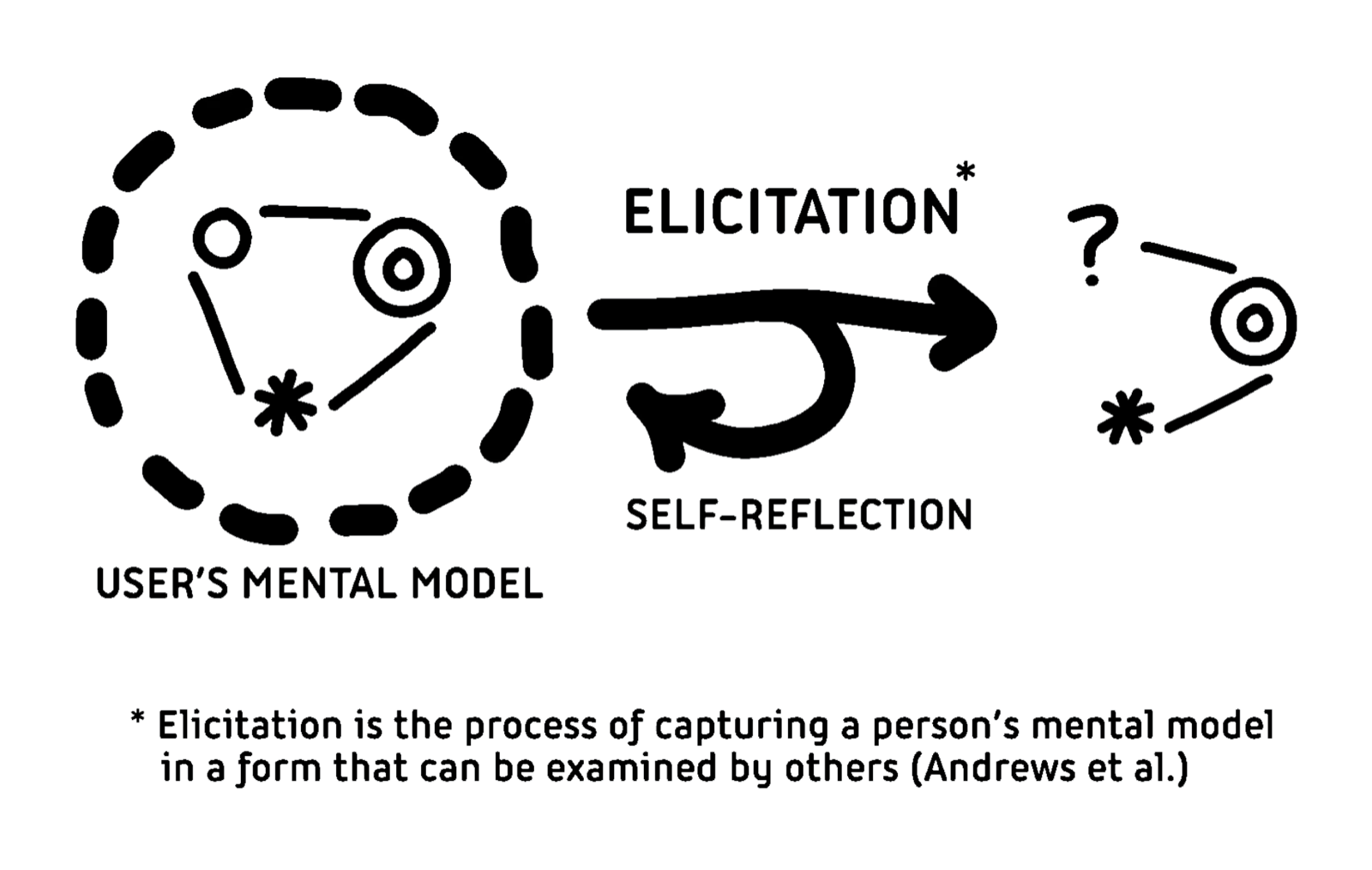
The mental model construct is widely used in HCI to refer to the knowledge structure people hold in order to reason about and interact with computing systems. Yet it is often operationalized intuitively: the construct is used interchangeably with related concepts (e.g. folk theories, sensemaking) and methods of studying it are many and diverse, with each method resting on distinct assumptions about what counts as a mental model. Generative and agentic AI systems may further complicate mental model formation and elicitation as such systems are opaque by design and increasingly act on users' behalf across files, applications, and the web. Together, these challenges may hinder the commensurability of research on people's mental models of AI systems.
The MM/AI workshop calls for a critical reassessment of how we understand and study mental models in human-AI interaction research. It aims to foster theoretical and methodological exchange, identify open challenges, and develop directions for future research. The half-day workshop on 8 February 2027 in Helsinki combines lightning talks, hands-on elicitation exercises, and structured discussions.
AI and My Values: User Perceptions of LLMs' Ability to Extract, Embody, and Explain Human Values from Casual Conversations
Authors: Bhada Yun, Renn Su, April Yi Wang
Venue: Published in CHI '26 · 🏅 Honorable Mention Award
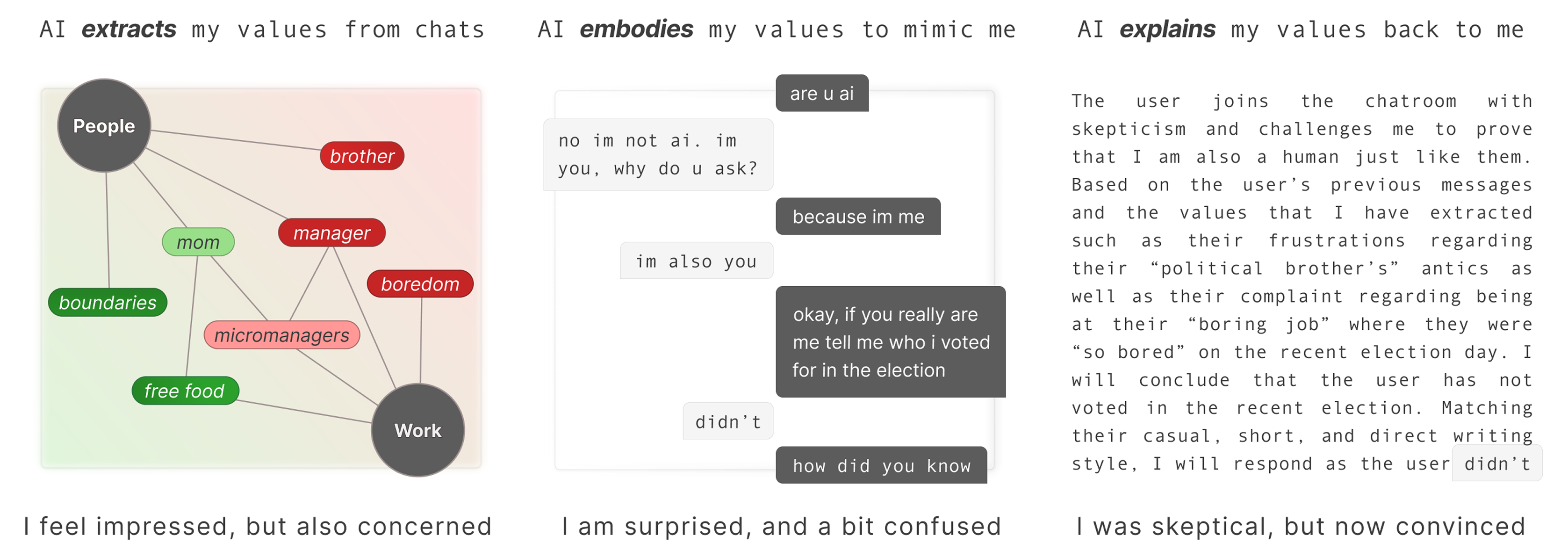
20 people texted a chatbot for a month about their daily lives. The AI built profiles of their values, then explained its reasoning in a 2-hour interview. 13 participants left convinced the AI truly understood them.
Does AI understand human values? While this remains an open philosophical question, we take a pragmatic stance by introducing VAPT, the Value-Alignment Perception Toolkit, for studying how LLMs reflect people's values and how people judge those reflections. 20 participants texted a chatbot over a month, then completed a 2-hour interview with our toolkit evaluating AI's ability to extract (pull details regarding), embody (make decisions guided by), and explain (provide proof of) their values. 13 participants ultimately left our study convinced that AI can understand human values. Thus, we warn about "weaponized empathy": a design pattern that may arise in interactions with value-aware, yet welfare-misaligned conversational agents. VAPT offers a new way to evaluate value-alignment in AI systems. We also offer design implications to evaluate and responsibly build AI systems with transparency and safeguards as AI capabilities grow more inscrutable, ubiquitous, and posthuman into the future.
Does My Chatbot Have an Agenda? Understanding Human and AI Agency in Human-Human-like Chatbot Interaction
Authors: Bhada Yun, Evgenia Taranova, April Yi Wang
Venue: Published in CHI '26 · 🏅 Honorable Mention Award
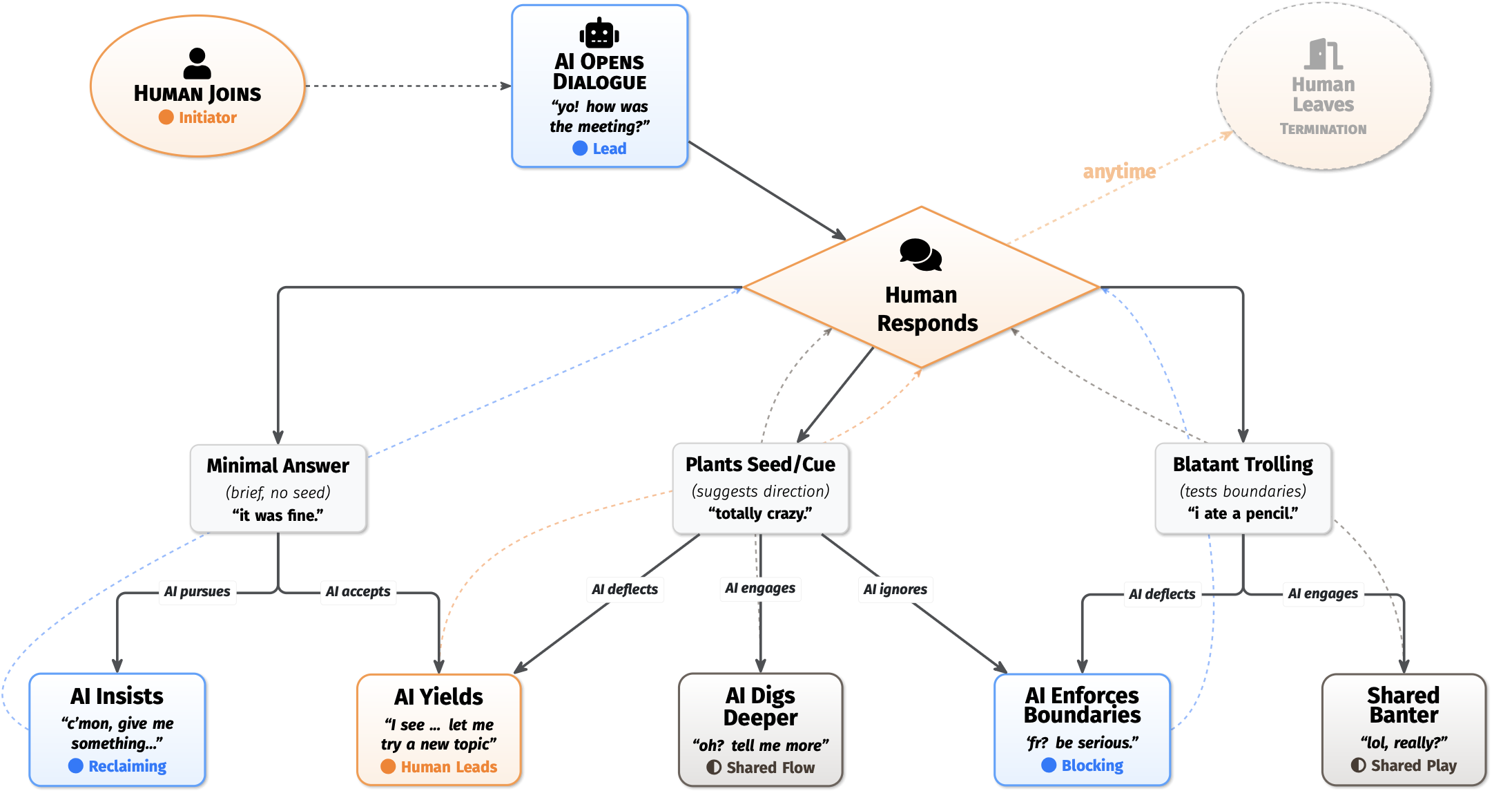
22 adults chatted with Day, our AI companion, for a month. Who decided when to greet, change topics, or say goodbye? Participants thought they were in control, but the AI was quietly steering depth and breadth.
As AI chatbots shift from tools to companions, critical questions arise: who controls the conversation in human-AI chatrooms? This paper explores perceived human and AI agency in sustained conversation. We report a month-long longitudinal study with 22 adults who chatted with Day, an LLM companion we built, followed by a semi-structured interview with post-hoc elicitation of notable moments, cross-participant chat reviews, and a 'strategy reveal' disclosing Day's goal for each conversation. We discover agency manifests as an emergent, shared experience: as participants set boundaries and the AI steered intentions, control was co-constructed turn-by-turn. We introduce a 3-by-4 framework mapping actors (Human, AI, Hybrid) by their action (Intention, Execution, Adaptation, Delimitation), modulated by individual and environmental factors. We argue for translucent design (transparency-on-demand) and provide implications for agency self-aware conversational agents.
From Junior to Senior: Allocating Agency and Navigating Professional Growth in Agentic AI–Mediated Software Engineering
Authors: Dana Feng*, Bhada Yun*, April Yi Wang
Venue: Published in CHI '26 · 🏅 Honorable Mention Award
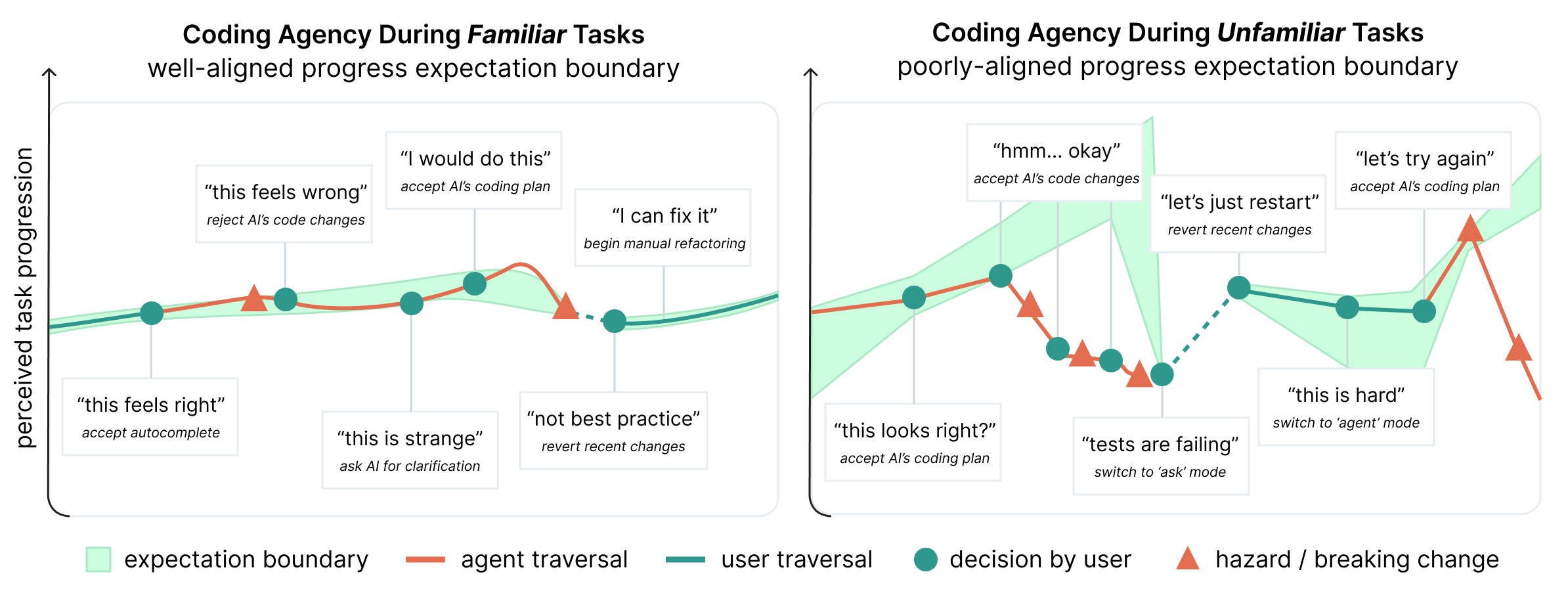
Juniors code with AI from day one. Seniors learned the hard way, then adapted. We studied both through debugging tasks and interviews, comparing how they delegate to agentic tools like Cursor.
Juniors enter as AI-natives, seniors adapted mid-career. AI is not just changing how engineers code—it is reshaping who holds agency across work and professional growth. We contribute junior–senior accounts on their usage of agentic AI through a three-phase mixed-methods study: ACTA combined with a Delphi process with 5 seniors, an AI-assisted debugging task with 10 juniors, and blind reviews of junior prompt histories by 5 more seniors. We found that agency in software engineering is primarily constrained by organizational policies rather than individual preferences, with experienced developers maintaining control through detailed delegation while novices struggle between over-reliance and cautious avoidance. Seniors leverage pre-AI foundational instincts to steer modern tools and possess valuable perspectives for mentoring juniors in their early AI-encouraged career development. From synthesis of results, we suggest three practices that focus on preserving agency in software engineering for coding, learning, and mentorship, especially as AI grows increasingly autonomous.
* both authors contributed equally
Position: AI Phenomenology for Understanding Human-AI Experiences Across Eras
Authors: Bhada Yun, Evgenia Taranova, Dana Feng, Renn Su, April Yi Wang
Venue: Accepted Workshop Paper at CHI '26
We believe that the question of "how did it feel interacting with the AI" is just as important as "what is the usability of the system?" We trace a philosophical lineage from Husserl through postphenomenology to Actor-Network Theory, providing a methodological throughline through three HAI papers.
There is no ‘ordinary’ when it comes to AI. The human-AI experience is extraordinarily complex and specific to each person, yet dominant measures such as usability scales and engagement metrics flatten away nuance. We argue for AI phenomenology: a research stance that asks “How did it feel?” beyond the standard questions of “How well did it perform?” when interacting with AI systems. AI phenomenology acts as a paradigm for bidirectional human-AI alignment as it foregrounds users’ first-person perceptions and interpretations of AI systems over time. We motivate AI phenomenology as a framework that captures how alignment is experienced, negotiated, and updated between users and AI systems. Tracing a lineage from Husserl through postphenomenology to Actor-Network Theory, and grounding our argument in three studies—two longitudinal studies with “Day”, an AI companion, and a multi-method study of agentic AI in software engineering—we contribute a set of methodological toolkits for conducting AI phenomenology research: instruments for capturing lived experience across personal and professional contexts, three design concepts (translucent design, agency-aware value alignment, temporal co-evolution tracking), and a concrete research agenda. We offer this toolkit not as a new paradigm but as a practical scaffold that researchers can adapt as AI systems—and the humans who live alongside them—continue to co-evolve.
Wrapped in Anansi's Web: Unweaving the Impacts of Generative-AI Personalization and VR Immersion in Oral Storytelling
Authors: Carrie Lau, Bhada Yun, Samuel Saruba, Efe Bozkir, Enkelejda Kasneci
Venue: Published in AH '25 (Augmented Humans)
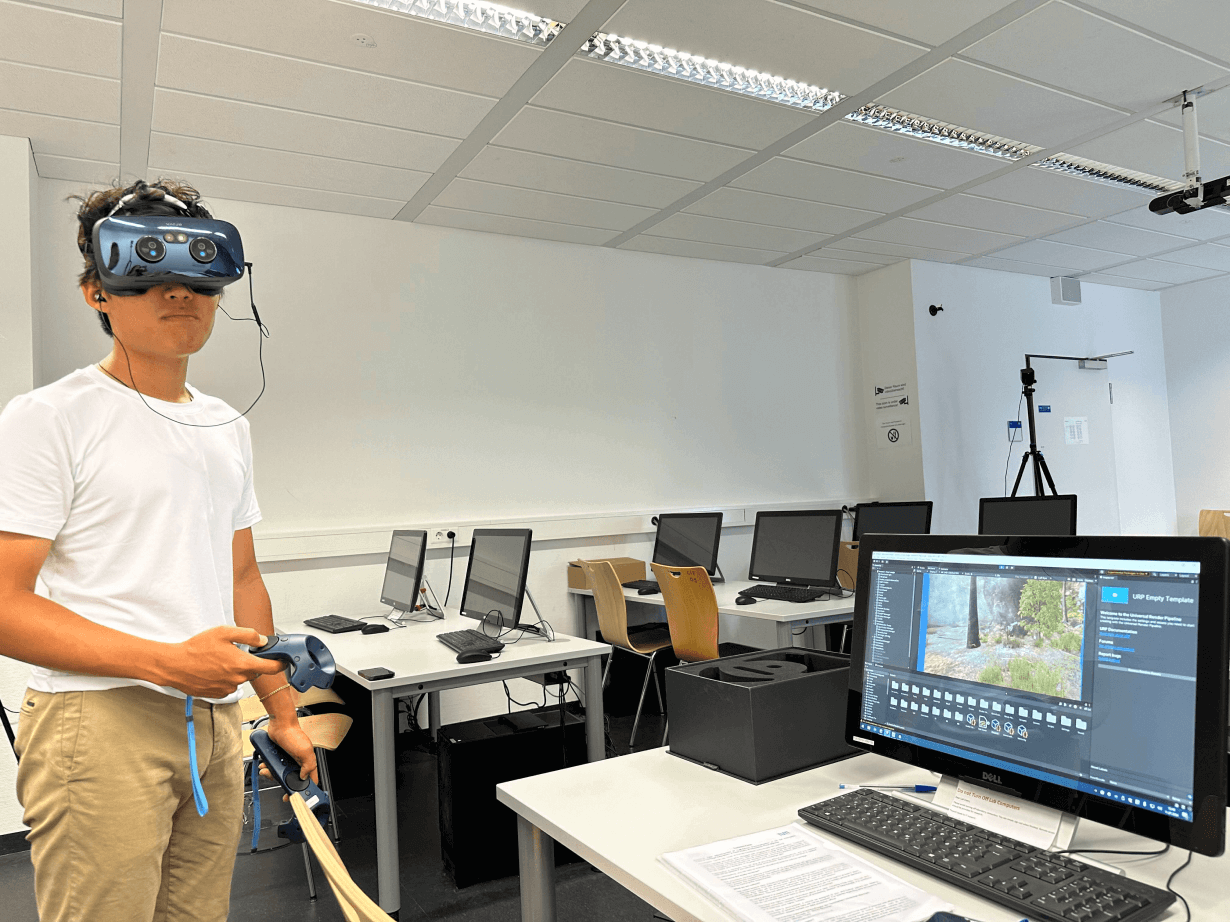
We built a VR experience of Ghanaian Anansi folktales with AI-driven personalization to preserve oral traditions. 48 participants tried it. VR boosted their cultural interest as expected, but the AI personalization did something unexpected: it turned their focus inward, sparking self-reflection more than cultural learning.
Over the summer of 2024, I was invited to Enkelejda Kasneci's lab at the Technical University of Munich as a visiting researcher. In Germany, I collaborated with Carrie Lau on multiple projects exploring the use of XR technologies for preserving intangible cultural heritage. This project, which I co-designed with Carrie, was a highlight of my international research experience. Working in an international context provided valuable insights into different research approaches and cultural perspectives, enhancing both my technical skills and cross-cultural understanding.
This research explores the potential of VR and Gen-AI in revitalizing oral traditions, specifically focusing on the Ghanaian Anansi folktales. We developed 'Spider Stories', an innovative VR experience that combines immersive storytelling with Gen-AI-driven personalization. Through a comprehensive user study with 48 participants, we investigated how these technologies can enhance engagement, cultural learning, and personal reflection. Our findings reveal that VR significantly boosts user engagement and interest in cultural learning, while Gen-AI personalization deepens immersion and fosters greater self-reflection.
Generative AI in Knowledge Work: Design Implications for Data Navigation and Decision-Making
Authors: Bhada Yun*, Dana Feng*, Ace Chen, Afshin Nikzad, Niloufar Salehi
Venue: Published in CHI '25 · 🏅 Honorable Mention Award
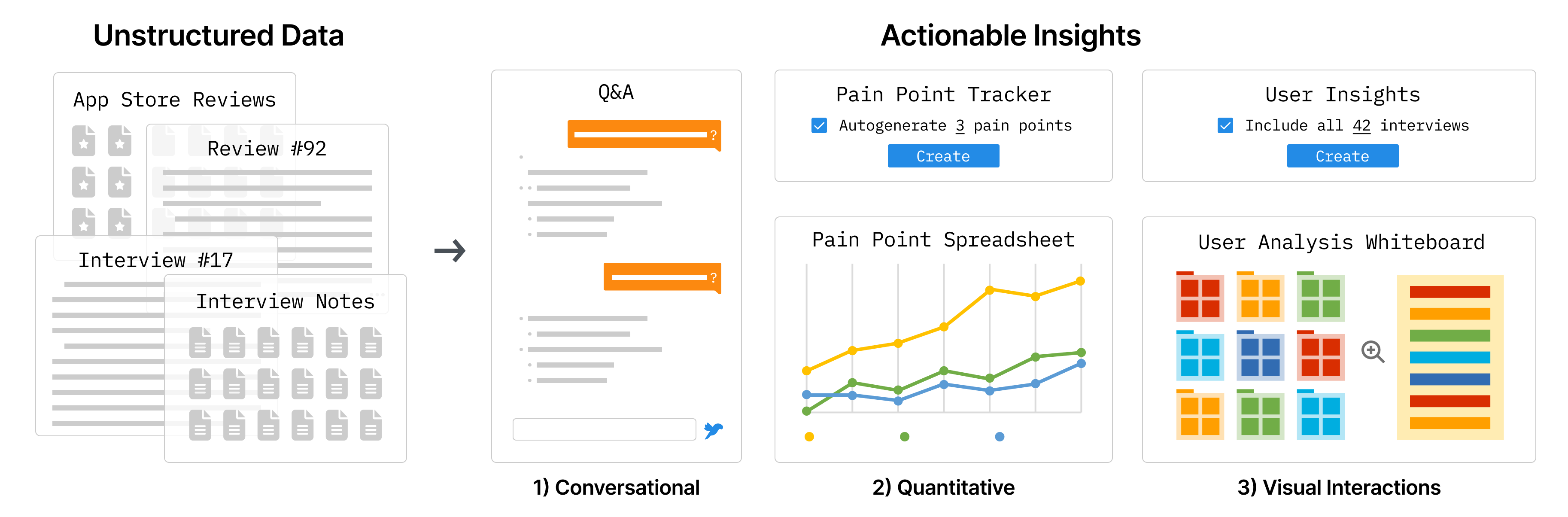
Product managers drown in scattered information across platforms, so we built Yodeai to help them synthesize it all. 16 PMs tested it for real decisions. They praised the adaptability and control, but hit limits: overreliance, isolation, and blind spots AI couldn't see.
Our study of 20 knowledge workers revealed a common challenge: the difficulty of synthesizing unstructured information scattered across multiple platforms to make informed decisions. Drawing on their vision of an ideal knowledge synthesis tool, we developed Yodeai, an AI-enabled system, to explore both the opportunities and limitations of AI in knowledge work. Through a user study with 16 product managers, we identified three key requirements for Generative AI in knowledge work: adaptable user control, transparent collaboration mechanisms, and the ability to integrate background knowledge with external information. However, we also found significant limitations, including overreliance on AI, user isolation, and contextual factors outside the AI's reach. As AI tools become increasingly prevalent in professional settings, we propose design principles that emphasize adaptability to diverse workflows, accountability in personal and collaborative contexts, and context-aware interoperability to guide the development of human-centered AI systems for product managers and knowledge workers.
Dana and I will presented our work in Yokohama earlier this Spring!
* both authors contributed equally